By Sean Keenan
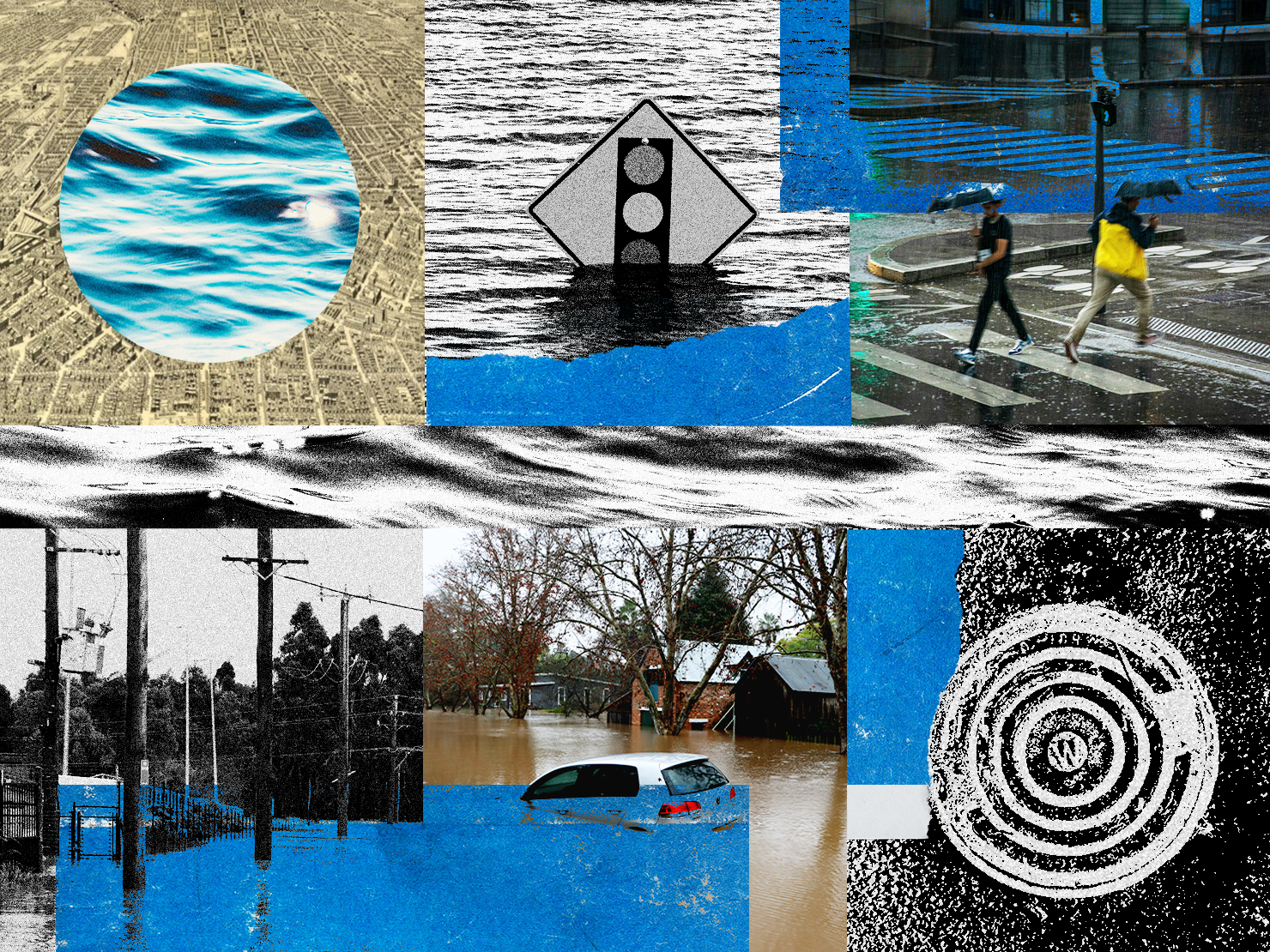
Water knows no prejudice, but a storm’s impact depends on who you are and where you live. Elevation matters—much of Buckhead sits higher than Bankhead—but so do decades of planning decisions, and a long history of racist civil engineering has left many of Atlanta’s lowest-income communities disproportionately vulnerable to flooding.
Now, city leaders are weighing a way to fund rain management: a proposed stormwater utility set to take shape later this year. Supporters say it would finally create a dedicated, reliable funding source to fix chronic flooding. Critics warn it would add yet another monthly bill for residents already stretched thin.
Here’s what a stormwater utility is, why Atlanta is considering one, and how its design could determine whether it becomes a solution or a burden.
What is a stormwater utility?
Stormwater runs off roads, driveways, and parking lots into drains, creeks, and rivers. Unlike drinking water or sewage, stormwater moves through a fragmented network of public pipes, private drainage systems, buried streams, open channels, detention ponds, and green space.
Today, Atlanta relies heavily on its general fund and Municipal Option Sales Tax to pay for stormwater projects, forcing flood control to compete with other city priorities. A stormwater utility, which would be run by the city’s Department of Watershed Management, would take pressure off those purses by directly billing residents and concentrating improvements under one municipal umbrella. Utilities also allow cities to borrow money against future revenue, accelerating projects that might otherwise take decades.
The money would be used to maintain aging pipes, stabilize eroding creeks, and build flood-control projects, including green spaces like Rodney Cook Sr. Park and Historic Fourth Ward Park. “It’s not all sexy,” said Chris Manganiello, the water policy director for the Chattahoochee Riverkeeper. “This is basic infrastructure that needs to be maintained. There isn’t a ribbon-cutting for a stormwater pipe.”
Why now?
Climate change is reshaping precipitation patterns and overwhelming systems designed for a different era. “We’re still averaging about 50 inches of rainfall a year, but in a given month we see greater swings between excess rainfall and dry conditions,” said Katherine Atteberry, a stormwater planning manager at the Atlanta Regional Commission. “We’re seeing more short, high-intensity storms … and our systems are not really designed for that.” Decades-old underground channels—both manmade and natural—are choking on heavy downpours, flooding Atlanta neighborhoods.
Many Atlanta neighborhoods were developed before the early 2000s, before Georgia began requiring developers to analyze how construction would affect downstream flooding. Overlay those challenges with decades of growth—more pavement, fewer places for water to soak into the ground—and the strain becomes obvious.
Atlanta would be joining a growing trend: Across the Metropolitan North Georgia Water Planning District, roughly 40 percent of local governments already operate stormwater utilities, Atteberry said. Nationwide, there are more than 2,100 stormwater utility programs, according to a Western Kentucky University study.
How would fees be calculated?
Most stormwater utilities charge fees based on how much runoff a property generates. That means measuring hard surfaces like rooftops, driveways, and parking lots.
Some governments, like Gwinnett County, have used aerial photography to calculate those surfaces precisely. Others rely on an “equivalent residential unit,” essentially an average house that serves as a baseline for a monthly fee. Larger (or more paved) properties pay more; smaller ones pay less.
In Georgia cities with stormwater fees, residential charges can range from a few dollars a month to more than $20. Many utilities also offer credit systems for property owners who install features like rain gardens or detention systems.
Who benefits? And who gets squeezed?
Dedicated funding is critical for long-term fixes rather than emergency repairs, but economic justice advocates warn that new fees could deepen hardship if affordability protections aren’t adopted.
“Lower-income communities are already paying the price through flooding, mold, and infrastructure failure,” said Tim Franzen, who leads the American Friends Service Committee’s Atlanta Economic Justice Program. “Asking them to shoulder another bill without protections would be unjust.” Any new funding stream, he added, should aim to repair that harm, rather than compound it.
What’s next?
Although numerous Atlanta City Councilmembers, including Dustin Hillis and Thomas Worthy, have expressed interest in instituting a stormwater utility, there is no such ordinance before the council yet, and key questions remain unresolved: How much service would the utility provide? How would fees be calculated and appealed? How would affordability be addressed?
The debate ahead will hinge less on whether stormwater needs attention—that fact at least is clear—and more on whether Atlanta can design a system that treats rain not just as a threat to be managed but as a shared responsibility.
Leave a Reply